

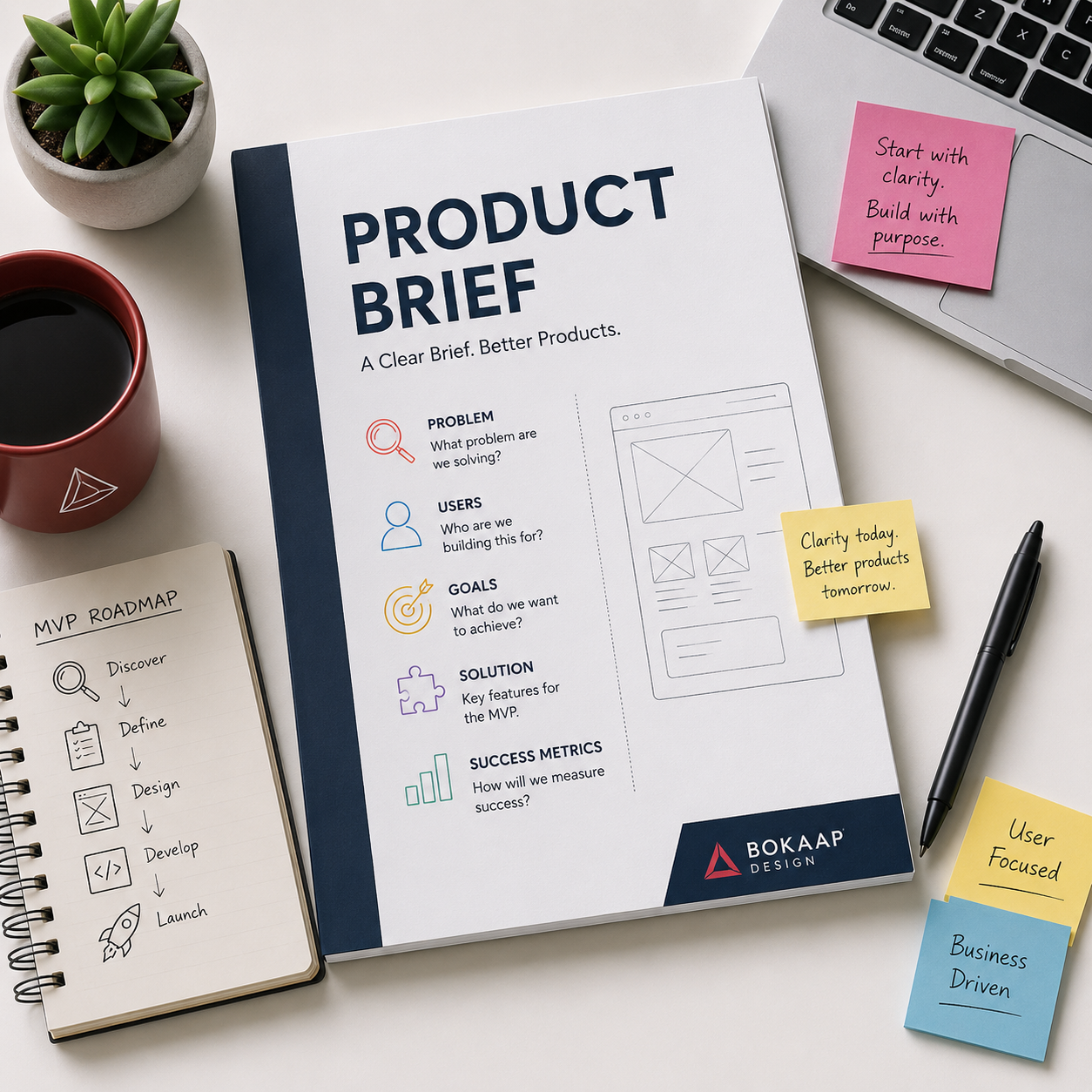
Launching a successful digital product begins long before designers create wireframes or developers write code. Every great product starts with clarity. Unfortunately, many founders approach a design studio with only a rough idea of what they want to build. While enthusiasm is valuable, it rarely provides enough information for a team to design and develop an effective product.
A product brief bridges that gap. It transforms ideas into structured requirements that designers, developers, and stakeholders can understand. Instead of relying on assumptions, everyone works from the same document, making the entire product development process more efficient.
Whether you’re building your first MVP or planning a large enterprise platform, learning how to write a strong product brief can reduce delays, improve collaboration, and help your product launch with confidence.
What Is a Product Brief?
A product brief is a document that explains the purpose of a digital product before design and development begin. It outlines the business problem, target audience, project goals, feature priorities, and success metrics so every team involved understands exactly what needs to be built.
Think of it as the blueprint for your digital product. Just as architects need detailed plans before constructing a building, product teams need a structured brief before creating interfaces or writing code.
Many founders believe discussing their idea during a meeting is enough. In reality, every missing detail creates uncertainty. Designers begin making assumptions about user needs, developers interpret requirements differently, and project timelines become difficult to manage. A well-written product brief removes this uncertainty by giving everyone a shared understanding of the project from day one.
Why Every Startup Needs a Product Brief
One of the biggest reasons digital products fail isn’t poor development it’s poor planning. Teams often jump directly into designing screens without fully understanding the business goals behind the project.
When there is no product brief, conversations become repetitive. Designers repeatedly ask for clarification, developers wait for missing requirements, and founders continue adding new features throughout the project. These constant changes increase development costs and delay product launches.
A structured product brief prevents these problems. It defines the project scope early, establishes priorities, and gives every stakeholder a clear direction. Instead of debating what should be built, teams can focus on building the right solution.
For startups with limited budgets, this clarity is even more important. Every design revision and development change consumes valuable resources that could have been invested elsewhere.
What Makes a Good Product Brief?
A successful product brief focuses on solving a business problem rather than listing features. Instead of describing every screen in detail, it explains why the product exists and how it should help users.
A good product brief usually includes:
- A short business overview
- The problem being solved
- Target users
- Business objectives
- MVP feature priorities
- Technical expectations
- Success metrics
Each section provides valuable context that helps design and development teams make informed decisions throughout the project.
Start With the Business Problem
Every product exists because someone has a problem worth solving. Before discussing dashboards, mobile apps, or user interfaces, explain what challenge your customers currently face.
For example, instead of saying, “We need an inventory management system,” explain the actual business issue.
A stronger problem statement would be the following:
“Retail businesses struggle to track inventory across multiple locations, leading to inaccurate stock levels, delayed deliveries, and lost sales.”
This simple shift changes the entire design process. Designers now understand the customer’s frustration rather than simply creating screens for an inventory system.
Products built around real problems almost always perform better because every feature supports a meaningful business objective.
Define Your Target Audience Clearly
A product designed for everyone usually serves no one particularly well. Your product brief should clearly explain who will use the product and what they hope to achieve.
Describe your primary users by answering simple questions.
- What industry do they work in?
- What are their daily responsibilities?
- What problems do they face?
- What motivates them to use your product?
Understanding users allows designers to create intuitive experiences instead of relying on assumptions. It also helps developers prioritize features that matter most to real customers.
Align Every Feature With a Business Goal
One of the most common mistakes founders make is treating every feature as equally important. In reality, every feature should support a measurable business objective. If the goal is increasing customer retention, features that improve onboarding become a high priority. If the objective is reducing manual work, automation features deserve greater attention. When business goals guide product decisions, unnecessary functionality naturally disappears, resulting in a cleaner, more focused product.
Prioritize Features Before Development Begins
Many startup projects become expensive because every idea is included in the first release. Successful product teams avoid this by organizing features into priorities. The first release should contain only the functionality necessary to solve the core user problem. Secondary improvements can be introduced after launch once user feedback has been collected. Future enhancements should remain on the roadmap until they provide measurable value.
This approach keeps development manageable while allowing products to reach the market much faster.
How to Write a Product Brief That Designers Can Actually Use
Once you have identified the business problem, the next step is to organize your information into a clear and logical structure. A design studio should be able to read your product brief and understand your project without scheduling multiple clarification meetings. Every section should answer an important business question rather than simply describe features.
Start with a short overview of your company and explain why the product is being built. This gives the design team context about your business, industry, and long-term vision. After that, explain the customer problem, identify your target audience, define your business goals, and outline the key features required for launch. Finally, include any technical requirements, preferred platforms, competitor references, and measurable success metrics.
A clear structure allows designers to focus on solving user problems instead of spending time gathering missing information.
A Simple Product Brief Template
You don’t need a fifty-page document to communicate your vision effectively. In fact, most successful startup product briefs are only two to five pages long because they focus on clarity rather than complexity.
A practical product brief should include:
- Project overview and business background
- Problem statement
- Target users and customer personas
- Business objectives
- MVP features and future roadmap
- Competitor references
- Technical requirements
- Success metrics and KPIs
Think of this template as the starting point rather than the final deliverable. As your product evolves, your brief should evolve with it.
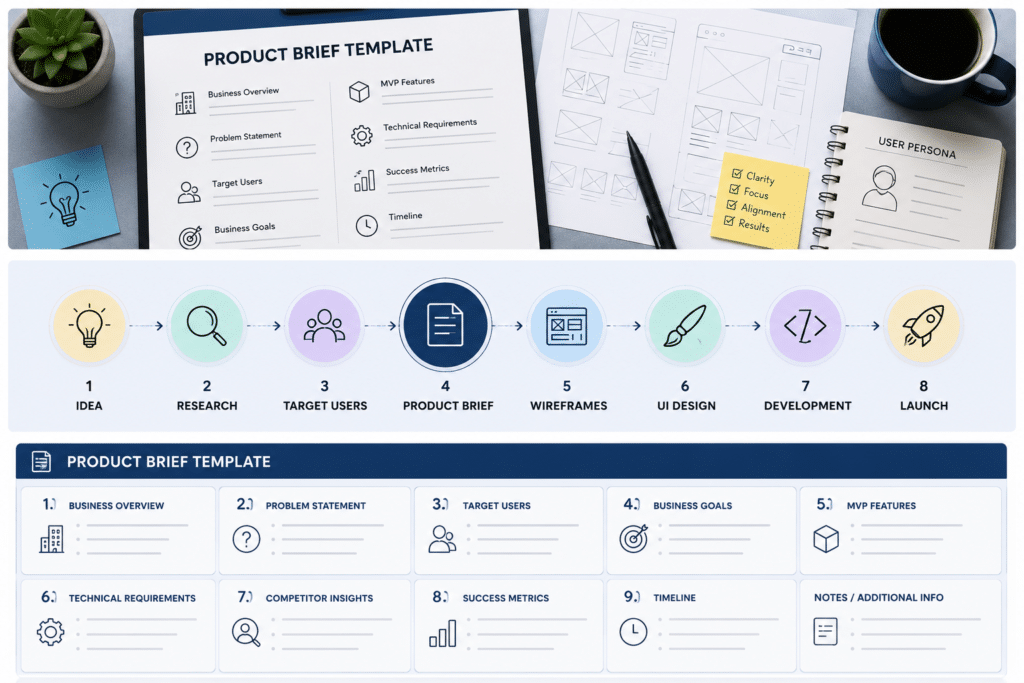
Product Brief Template for Digital Product Design
Product Brief vs Product Requirements Document (PRD)
Many founders confuse a product brief with a product requirements document (PRD). Although both documents support product development, they serve different purposes.
A product brief explains the vision behind the project. It focuses on business goals, customer problems, target users, and the overall direction of the product. It answers questions such as Why are we building this? And who is it for?
A PRD, on the other hand, is much more technical. It contains detailed feature specifications, workflows, edge cases, acceptance criteria, and technical requirements that developers use during implementation.
In most startup projects, the product brief comes first. Once the strategy has been validated and the product direction is clear, the information is expanded into a detailed PRD for development.
Common Mistakes Founders Make When Writing a Product Brief
Many product briefs fail because they focus on the solution before fully understanding the problem. Founders often become excited about features and forget to explain why those features matter.
Some of the most common mistakes include:
- Writing feature lists instead of business objectives.
- Trying to solve too many problems in the first release.
- Ignoring user research.
- Leaving success metrics undefined.
These mistakes usually lead to additional revisions, longer timelines, and increased development costs. Spending a little more time on planning often saves weeks of unnecessary work later.
Why a Strong Product Brief Improves the Entire Product Development Process
A well-written product brief benefits every member of the project team. Designers gain a better understanding of user expectations, developers receive clearer technical direction, and stakeholders have a shared vision of what success looks like. Instead of repeatedly asking questions throughout the project, everyone works from the same source of information. This improves communication, reduces misunderstandings, and helps projects move forward with greater confidence.
A strong product brief also makes prioritization easier. When new feature requests appear, teams can evaluate whether those requests support the original business objectives before adding them to the project scope.
How Bokaap Design Helps Founders Turn Ideas Into Products
At Bokaap Design, every project begins with strategy rather than screens. Before creating wireframes or visual designs, our team works closely with founders to understand the business, identify customer challenges, define product goals, and prioritize MVP features.
This collaborative approach allows us to build products that solve real user problems instead of simply adding functionality. By combining product strategy, UX/UI design, and end-to-end product development under one team, we reduce communication gaps and help founders launch products with greater confidence.
Whether you’re creating a SaaS platform, a B2B dashboard, a mobile application, or a new web experience, a clear product brief ensures every design decision supports measurable business outcomes.
Final Thoughts
A successful digital product doesn’t begin with design software or development tools. It begins with clarity. A product brief gives your entire team a shared understanding of what you’re building, who you’re building it for, and how success will be measured.
If you’re planning your first MVP or redesigning an existing product, investing time in a structured product brief will reduce uncertainty, improve collaboration, and create a smoother development process from start to finish.
The strongest products are rarely built by accident. They are built through careful planning, informed decision-making, and a clear understanding of both user needs and business objectives. A well-prepared product brief is the first step toward achieving that goal.
Frequently Asked Questions
What is a product brief?
A product brief is a document that outlines the business goals, user needs, project scope, and feature priorities for a digital product before design and development begin.
Why is a product brief important?
A product brief helps founders, designers, and developers stay aligned throughout the project. It reduces misunderstandings, prevents unnecessary revisions, and ensures the product solves the right customer problem.
What should a product brief include?
A product brief should include the business overview, problem statement, target audience, product goals, MVP features, technical requirements, competitor references, and measurable success metrics.
How is a product brief different from a PRD?
A product brief focuses on the product vision and business strategy, while a Product Requirements Document (PRD) provides detailed technical specifications used during software development.
Should startups create a product brief before building an MVP?
Yes. Even the simplest MVP benefits from a clear product brief because it helps teams prioritize essential features, define business goals, and reduce costly changes during development.
Continue Reading
If you’re planning your first digital product, these guides can help you take the next step: