

In today’s digital economy, a software product is far more than a collection of features. It often drives customer engagement, revenue growth, and long-term business success. Whether you’re launching a startup, building a SaaS platform, or modernizing an enterprise system, success often depends on the quality of your digital product design and the decisions you make before development begins.
Many organizations invest heavily in technology but underestimate the role product design plays in shaping user adoption and business growth. Great products don’t happen by accident. Teams plan, test, refine, and improve them around real user needs and clear business objectives. When strategy, design, and development work together, products become easier to use, easier to scale, and more likely to succeed in competitive markets.
The Hidden Cost of Fragmented Development
One of the most common challenges businesses face is treating strategy, design, and development as separate activities. A consultant defines the business model, a design agency creates the interface, and a development team builds the product. While this approach may seem efficient, it often creates gaps between vision and execution.
As projects move between teams, organizations often lose valuable context. Different teams interpret user needs differently, discover technical limitations too late, and shift priorities throughout the process. Over time, these disconnects create what many teams call “design debt,” a situation where the product becomes increasingly difficult to maintain, improve, and scale.
Why Product Strategy Matters Before Design Begins
Many founders want to jump straight into design and development. However, successful products start with clarity rather than code.
Before designing a single screen, teams should answer several key questions:
- Who is the product for?
- What problem does it solve?
- Why would users choose it over alternatives?
- How will success be measured?
- Which features create the most value?
When businesses answer these questions early, they create a roadmap that guides development and reduces uncertainty throughout the product development process. This step becomes especially important for startups, where resources are limited and every decision has a direct impact on growth.
Turning Ideas Into Meaningful User Experiences
Once teams establish a strategic foundation, they can focus on creating experiences that users understand and navigate with ease. This is where UX/UI design plays a critical role. While many people associate design with aesthetics, user experience design focuses on solving problems. It requires understanding how users think, how they interact with products, and how teams can remove friction from every stage of the journey.
A well-designed experience helps users achieve their goals quickly and confidently. Navigation feels intuitive, information is easy to find, and tasks are simple to complete. These details may seem small, but they often determine whether users adopt a product, remain engaged, and continue using it over time.
At the same time, visual design reinforces trust and consistency. Thoughtful interfaces make complex functionality feel approachable while creating a stronger connection between users and the product. The goal is not simply to create something attractive but to create experiences that support both usability and business performance.
Designing for Different Types of Digital Products
Not every digital product serves the same purpose. A customer-facing mobile application has very different requirements from an internal operations platform, and a SaaS dashboard demands a different approach than a marketing website. For SaaS product design, teams often focus on onboarding, feature discovery, and long-term engagement. Users need to understand the product’s value quickly while navigating increasingly complex workflows as they become more advanced. Clear information architecture and intuitive interfaces help reduce churn and improve adoption.
B2B product design presents a different challenge. Business platforms often manage large amounts of data, support multiple user roles, and power sophisticated workflows. Designers must balance complexity with simplicity so users can perform critical tasks efficiently without feeling overwhelmed.
Regardless of the platform, the goal remains the same: help users achieve meaningful outcomes while supporting broader business objectives. Strategic digital product design helps businesses create user-centric software, streamline development, and build scalable digital experiences.
From Design to Development: Closing the Gap
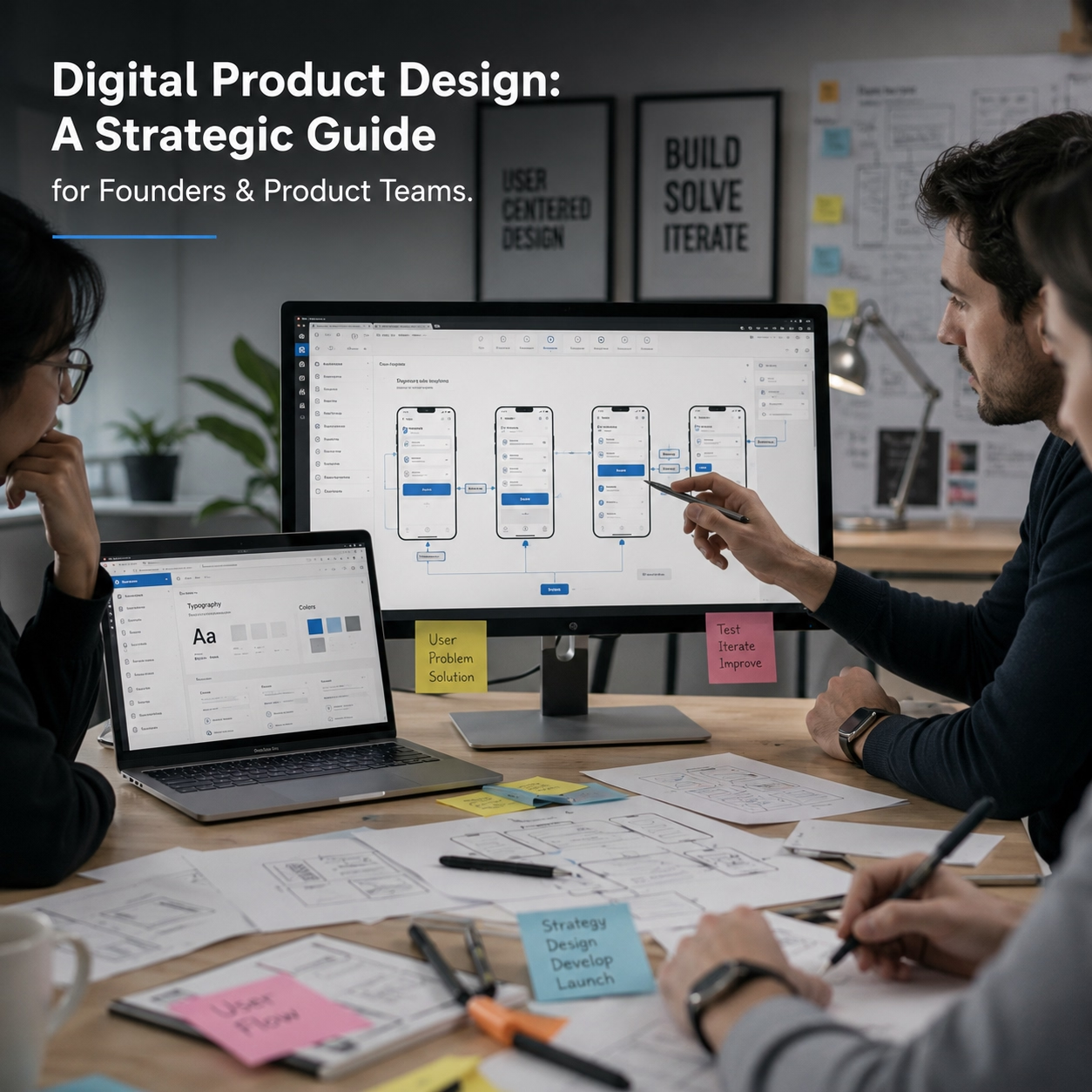
Even the most thoughtful design can fail if teams do not implement it effectively. This is why end-to-end product development has become increasingly important for modern businesses. When designers and developers collaborate throughout the process, they identify potential issues early instead of discovering them after launch. Technical decisions support the intended user experience, while designers create solutions that remain practical and feasible.
This collaborative approach creates a smoother transition from wireframes to production-ready solutions. It also helps teams maintain consistency across the product, ensuring that the experience users see in prototypes closely matches the final application.
In addition, integrated teams move faster because they remove communication barriers and streamline decision-making. As a result, businesses can launch products more efficiently while maintaining quality at every stage.
Product Design Doesn’t End at Launch
One of the biggest misconceptions about digital product design is that it ends when a product goes live. In reality, launch marks the beginning of the product’s evolution. User expectations change, markets evolve, and businesses grow. Features that once felt innovative can quickly become outdated, while workflows that once worked well can slow users down as products become more complex. Successful companies continuously adapt their products to meet changing needs.
For this reason, product redesign and enhancement projects often deliver as much value as new product launches. Rather than rebuilding everything from scratch, teams can identify friction points, improve workflows, and modernize interfaces to create a better overall experience.
Organizations that regularly review product performance and gather user feedback uncover new opportunities to improve usability, increase engagement, and extend the lifespan of their digital products.
The Role of Modernization in Long-Term Growth
Many businesses still rely on legacy systems built years ago that no longer meet modern user expectations. While these systems often contain valuable functionality, outdated experiences limit adoption, reduce efficiency, and create frustration for users.
Modernization goes far beyond visual updates. It requires teams to evaluate how users interact with the product, identify obstacles, and redesign workflows to improve efficiency. In many cases, small improvements create a significant impact on productivity and customer satisfaction. Modernization efforts often focus on:
- Identifying usability challenges and UX bottlenecks.
- Simplifying workflows to improve task completion and efficiency.
By addressing these issues strategically, organizations can continue leveraging existing investments while creating experiences that feel modern, intuitive, and scalable.
Building Products That Support Growth
Add a quick summary list before the conclusion. Successful digital products are built on:
- Clear product strategy
- User-centered design
- Strong UX/UI foundations
- Collaborative development
- Continuous improvement
- Long-term scalability
When these elements work together, organizations create products that support sustainable growth and deliver measurable business results.
Frequently Asked Questions
What is the difference between product design and web design?
Web design typically focuses on marketing, brand awareness, and the conversion of a visitor into a lead. Digital product design, by contrast, focuses on the ongoing functional journey of a software user how they interact with your dashboard, how they solve their problems, and why they choose to return.
When should I engage a design studio?
The ideal time to engage is during the ambiguity phase. If you have a concept but haven’t finalized the feature set, user workflows, or technical constraints, an early-stage expert partner can prevent costly rework by structuring your foundation before you start development.
What is “design debt,” and how do I avoid it?
Design debt occurs when speed is prioritized over structure. It manifests as inconsistent UI, fragmented user experiences, and hard-to-maintain code. We avoid this by implementing design systems early, ensuring that your product remains consistent as you scale.
Ready to build your next digital product?
Bokaap Design partners with businesses to bridge the gap between early-stage ideas and market-ready platforms. If you are looking for a design-led development partner that understands the intersection of strategy, design, and code, let’s start a conversation.