

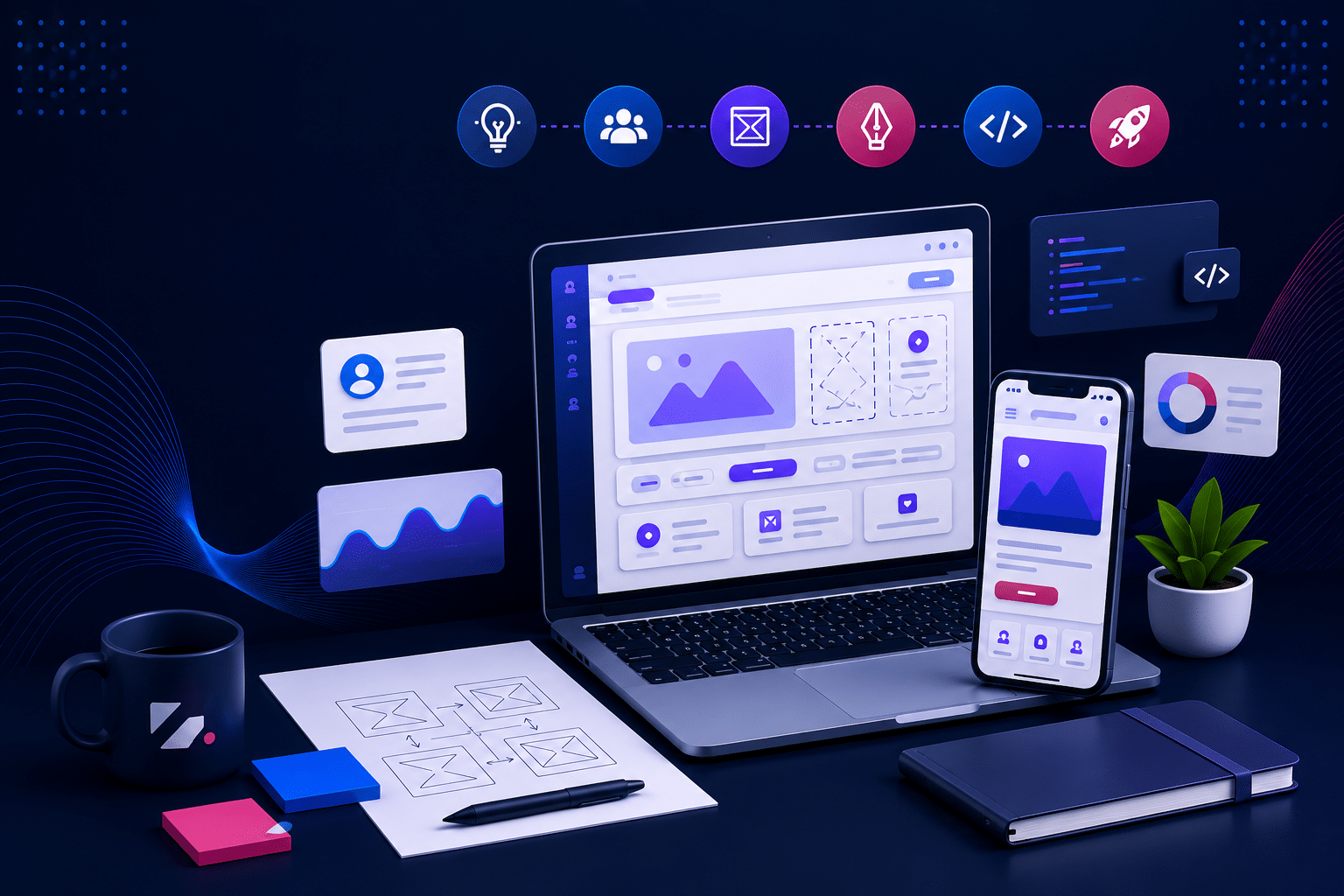
Product design starts long before designers create interfaces or developers write code. It begins with understanding a problem worth solving and designing a solution that delivers value to both users and the business.
However, many first-time founders assume product design is simply about making an app or website look attractive. While visual design plays an important role, it represents only one part of a much larger process. Successful digital products combine business strategy, user research, UX/UI design, technology, and continuous improvement to create experiences that people enjoy using.
Whether you’re building your first startup, planning a SaaS platform, or redesigning an existing product, understanding the product design process can save months of development time and prevent expensive mistakes. More importantly, it helps you build products that users trust, adopt, and continue using.
This guide explains what product design is, why it matters, and how each stage of the process contributes to building successful digital products.
What Is Product Design?
Product design is the process of researching, planning, designing, testing, and improving a digital product to solve user problems while supporting business goals. It combines product strategy, user experience design, interface design, and software development to create products that are useful, intuitive, and scalable.
Unlike graphic design or traditional web design, product design focuses on the complete customer experience. It considers every interaction a user has with a product, from discovering it for the first time to completing everyday tasks months after launch.
A strong product design process helps businesses answer important questions before investing in development.
- What problem are we solving?
- Who are we building for?
- Which features create the most value?
- How can users complete tasks with the least amount of effort?
- How will we measure success after launch?
By answering these questions early, businesses reduce uncertainty and make smarter product decisions.
Why Product Design Matters
Many startups fail because they build products that customers don’t need or struggle to use. In many cases, the technology works perfectly, but the experience doesn’t solve the right problem.
Good product design reduces that risk. Instead of making assumptions, product teams validate ideas before development begins. They research customer behavior, identify pain points, prioritize features, and test solutions with real users. As a result, they spend less time fixing avoidable problems and more time building products that create measurable business value.
Effective product design also helps businesses:
- Reduce development costs by validating ideas before writing code.
- Improve customer retention through better user experiences.
- Increase conversions with intuitive onboarding and navigation.
- Build scalable products that support future growth.
- Create consistency across websites, web applications, and mobile apps.
Whether you’re launching a new product or improving an existing one, investing in product design creates a stronger foundation for long-term success.
Product Design Is More Than Visual Design: One of the biggest misconceptions among first-time founders is that product design starts with colors, typography, or interface layouts. In reality, visual design comes much later.
Before anyone designs a screen, product teams need to understand users, define business objectives, and identify the most valuable problems to solve. Think of it this way.
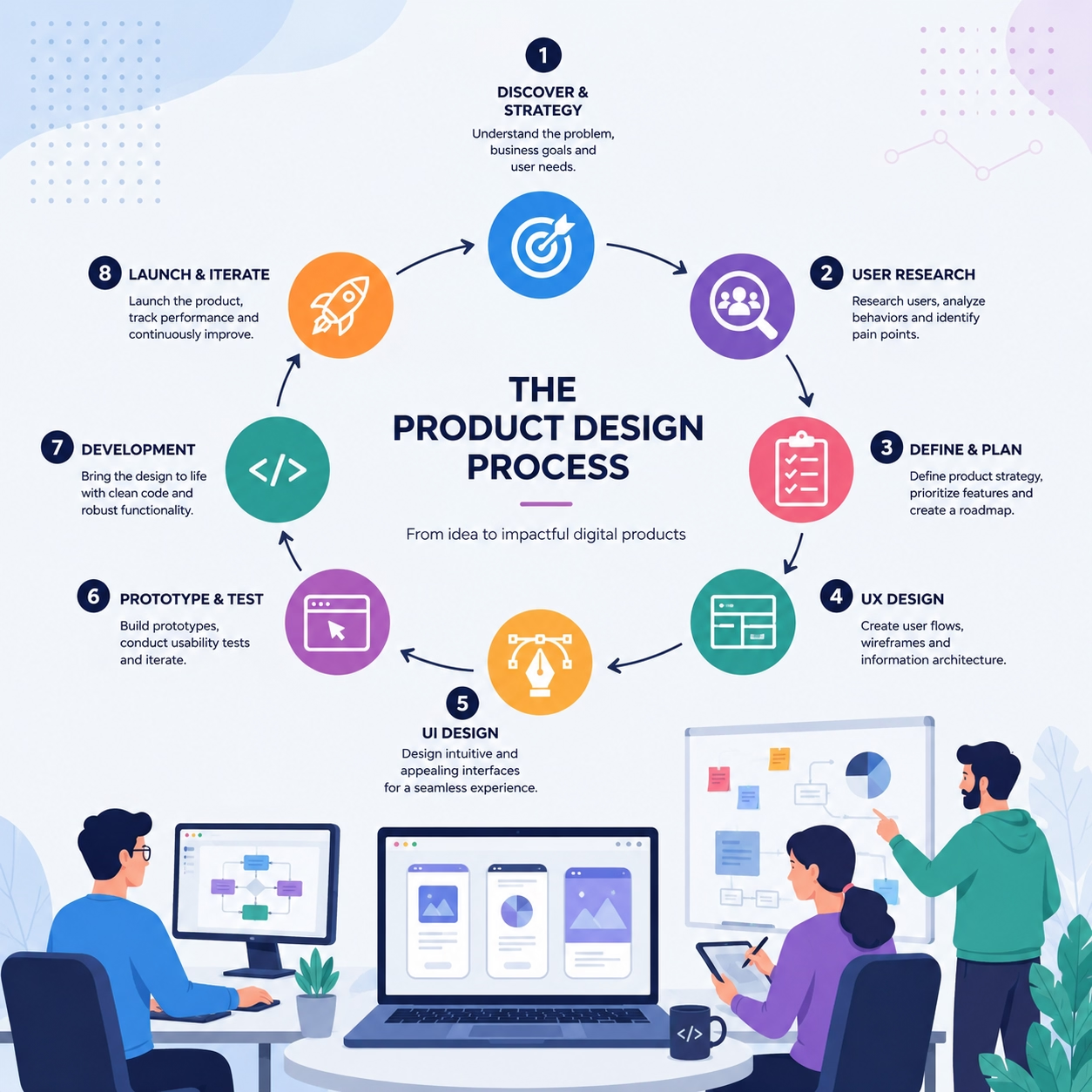
Imagine building a house. Choosing paint colors before creating the architectural plans would make little sense. Digital products follow the same principle. A beautiful interface cannot compensate for poor navigation, confusing workflows, or features that users don’t need. Successful products combine several disciplines into one connected process.
Each stage supports the next, creating a smoother journey from idea to launch. The Product Design Process. Every successful product follows a structured process. Although every project differs, most digital products move through the same core stages.
Instead of rushing into development, experienced product teams validate assumptions, refine ideas, and test solutions before investing significant time and resources.
The product design process typically includes:
- Product discovery and strategy
- User research
- Information architecture
- UX/UI design
- Prototyping and usability testing
- Development
- Launch and continuous improvement
Each stage reduces uncertainty and increases the likelihood of building a product that users genuinely value.
Frequently Asked Questions
What is digital product design?
Digital product design is the strategic process of identifying a market opportunity, defining user problems, and crafting a digital solution that is both functional and aligned with business goals through UX/UI design and scalable development.
Why is product design important for startups?
Product design is crucial for startups because it helps prevent ‘design debt,’ ensures the product solves actual user problems, and aligns technical execution with business KPIs like retention and conversion.
How does Bokaap Design differ from standard agencies?
Unlike fragmented agencies, Bokaap offers ‘Single Partner Accountability,’ managing the entire lifecycle from strategic roadmapping and UX/UI design to scalable software development.
Can you help with existing product modernization?
Yes. We specialize in analyzing dated or confusing legacy systems and surgically replacing friction points to improve user retention without disrupting your current operations.